

Stories
Mystery of the Yellow Bulbs: Discovery in the Amazon of a New Caterpillar-Ant-Parasitic Plant Relationship
“Huh, that’s weird”, I muttered as I trudged through the mud in the rainforest. Even though the sun was setting, it was still hot and steamy, and sweat was dripping into my eyes as I stared at a tree with bizarre yellow outgrowths…I didn’t know that what was in front of my eyes was an ant-caterpillar parasite relationship.
If you are looking for the chance to Make Science Happen

Watch the video ‘Mystery of the Yellow Bulbs: Caterpillars, Ants and Parasitic Plants.’
Some sort of fungus? That was my first thought. After all, I’ve seen tons of strange-looking fungi in the Amazon by now. But something about these yellow bulby-looking things piqued my curiosity, so I walked up to take a closer look.

A tree covered with strange yellow bulbs in the jungle
Inspecting them closer only made things more confusing. They didn’t really look like fungi, at least not like any I had ever seen before. Was it a fruit produced by the tree? Plant lenticels? I started to take some pictures.

A closer look at the mysterious yellow “bulbs”
That’s when I noticed something really interesting. As I scanned the tree’s alien protuberances, my eyes locked onto something I wasn’t quite anticipating: caterpillars! I had definitely never seen or heard of, anything like this before. They appeared to be munching away on the yellow bulbs.

An unknown caterpillar eating one of the yellow bulbs
I quickly noticed there were also ants surrounding these caterpillars. The ants were not attacking the delicate butterfly larvae, so this had to be some sort of symbiotic relationship between the caterpillars and ants. While I had little idea at the time what I was looking at, my background in entomology was telling me one thing: this was something cool.
 An ant, Ectatomma tuberculatum, guarding a caterpillar

Always gotta show a finger for scale
By this point, I had returned to the tree with my colleague, wildlife photographer Jeff Cremer. We took several shots of the caterpillars, ants, and yellow bulbs. This kind of mutualistic caterpillar-ant relationship is known as myrmecophily and has interested scientists for a long time. Caterpillars belonging to the family Lycaenidae have a special structure known as the dorsal nectary organ, which secretes sugars and amino acids. This sweet, nutritious reward is what keeps the ants around and in return, the ants protect the caterpillars by driving off hungry predators and parasitoids.
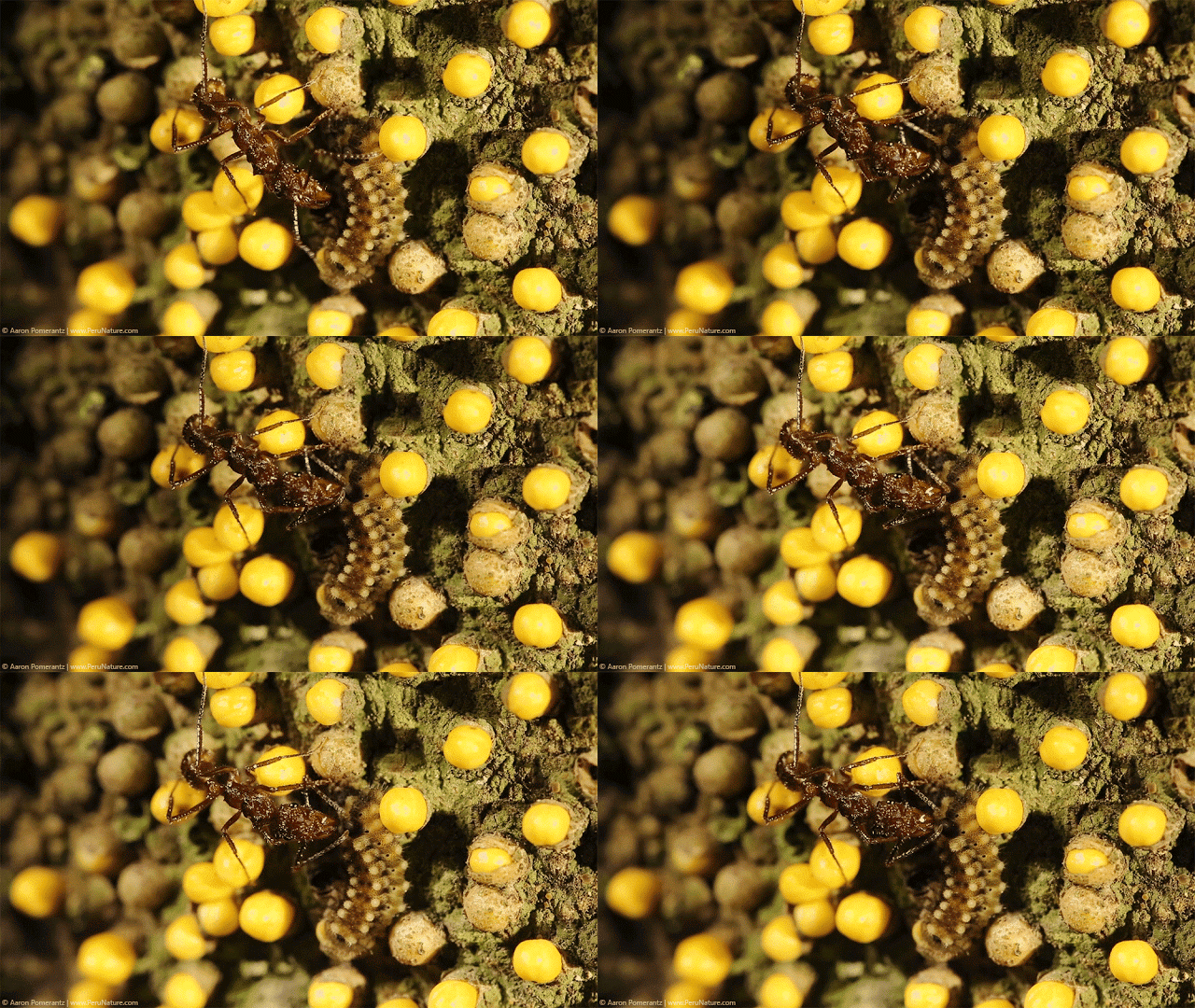 An attendant ant tapping the caterpillar and receiving a nectar droplet.
Filmed thanks to the help of Chris Johns
As I was inspecting this bizarre caterpillar-ant interaction, I noticed something flutter just above my head. A butterfly! Not just any butterfly, I could immediately identify it as lycaenid and it had a distinct yellow spot on its hind wing that looked remarkably like the yellow bulbs. Was this the adult of the caterpillars!?

A butterfly with a yellow wing spot lands on the tree
Ok, Homework Time
I wrapped up my fieldwork and headed back to the states, but I was dying to figure out what was going on here. To recap, we observed:
- Mysterious yellow bulbs growing on a tree
- Caterpillars eating the yellow bulbs
- Ants taking care of the caterpillars
- Butterfly with yellow wing spot lands on the tree with yellow bulbs
I assembled the photos from the trip and started emailing the top butterfly experts as well as botanists. The responses I received were mostly along the lines of “I’ve never seen anything like this before” and “there’s nothing published on the life history of the butterfly”. Ok, so it seemed like we were on to something new here.

With the help of some experts, we were able to identify the butterfly as Terenthina terentia, which belongs to the family Lycaenidae. While this family contains around 6,000 species, the Neotropical lycaenids are still only partially known and poorly studied (Pierce 2002). Many species of lycaenids are known to engage in relationships with ants (aka myrmecophily) so our caterpillars definitely fit these criteria.
Filming this strange caterpillar-ant parasitic plant relationship
Several botanists emailed my pictures around to their colleagues until we were finally able to ID the yellow bulbs as a “very unusual and rarely seen” parasitic plant belonging to the family Apodanthaceae. Ever heard of that? Yeah, me either.
Apodanthaceae is a small family of parasitic plants that live inside other plants and they only become visible once the flowers burst through the bark (Bellot 2014). The species we found is possibly Apodanthes caseariae and there is little known about their ecology, what pollinates them, or how they infect their host plants. Our observations appear to be the first record of an insect utilizing Apodanthes as a host plant. The strange yellow bulbs of this plant appear to emerge once a year around October through January and then fall off.

The yellow bulbs later identified as a rare flowering parasitic plant
In January, my colleague Phil Torres visited this site and checked out the caterpillars. You can see the yellow bulb flowers are more developed at this point.
What’s the Take-Home?
Although this species of butterfly, Terenthina terentia, was described over one hundred years ago, we knew essentially nothing about how it lived its life until now. In other words, we helped to describe its life history by documenting the larval stages, host plant, and ant-associated behavior. By observing and studying this complex relationship, we can gain more insight into the diverse array of biological interactions in the Amazon rainforest.
Compilation shots of a potential Terenthina terentia caterpillar showing its morphology
However, our work is far from over and many questions still remain. Is this the butterfly’s only host plant? How does it know when the parasitic plant is emerging and how does it find the yellow bulbs? What purpose does the butterfly’s yellow wing spot serve?
Perhaps the yellow wing marking helps the butterfly blend in with the yellow parasitic plant and reduces predation by birds. While this hypothesis needs further attention, the similar wing pattern and observed host plant could lend support to the idea of a long-term co-evolutionary relationship between the flowering endoparasitic herb and the Terenthina terentia butterfly. In any case, we’ll attempt to continue to pick apart this fascinating Amazon mystery which will undoubtedly result in even more questions!
By Aaron Pomerantz
Entomologist. Get in touch on Twitter @AaronPomerantz
Special thanks to colleagues in and out of the field who assisted with this project, especially Jeff Cremer, Frank Pichardo, Chris A. Johns, Phil Torres, Christie Wilcox, Jason Goldman, Trevor Caskey, and Alex Gardels. Thanks to Andrew Warren, Alex Wild, Naomi Pierce, Adrian Hoskins, Sidonie Bellot, and Robert Robbins for help with insect/plant identifications and expert input.
References
Bellot S, Renner SS (2014) The systematics of the worldwide endoparasite family Apodanthaceae (Cucerbitales), with a key, a map, and color photos of most species. PhytoKeys 36: 41-57
Pierce NE, Braby MF, Heath A, Lohman DJ, Methew J, Rand DB, Travassos MA (2002) The ecology and evolution of ant association in the Lycaenidae (Lepidoptera). Annual Review of Entomology 47: 733-771
Cool right? How you can take action…
Help us make science happen and visit Tambopata with Rainforest Expeditions. If not able to do that, then SHARE what we are doing in the field.
-
What our guest say
-
- Valuation Excellent
- 5/5
Paul H August 2026
FineSpitz August 2026
Jack Looney August 2026
Ching Han Toh August 2026
Maggie Kwok August 2026
Jim July 2026
Kai Liao July 2026
asbraziller July 2026
Tom K July 2026
Maria Carrero June 2026
Lauren Kuenstner June 2026
Adam C June 2026


We had an excellent 5 night stay at TRC with two couples. The remote Lodge and accommodation are unique especially with the open walls to the jungle in the rooms. The guides were first rate with superb knowledge and their ability to spot fauna in the dense jungle was incredible. We saw many species of monkeys; macaws, parrots, tapirs, etc.. even lucky enough to spot a jaguar. Food and service was really good. While not cheap it was I think very good value for money. We really enjoyed all the hikes and citizen science activities as well, he trips on the river and the clay licks. Overall amazing experience! As it’s the jungle not a zoo, you can’t guarantee that you’ll see everything all the time so allow enough days to properly explore. Read all
A once-in-a-lifetime experience in the middle of the rainforest. From airport pickup in Puerto Maldonado to the lodge and back, everything was exceptionally well organised. Communication was clear throughout, with the team always explaining what would happen, where to be and what to take care of. The staff at both HQ and the lodge were incredibly attentive, making the entire stay feel completely carefree. At this price point, this is the level of service you expect, but it is still impressive to experience it in such a remote setting. The food was another highlight: very well curated and balanced, with plenty of options at every buffet and, surprisingly, we never had the same dish twice. Read all
This was an excellent experience!! Highly recommend if you’re interested in visiting the Amazon Rainforest and Tambopata region. Especially happy with our guide Miguel, who was highly professional, informative, and organized. It was an immersive adventure and we got to see so many unique plants and animals. 10/10! Read all
Amazing experience at Refugio Amazonas. Rooms were comfortable and clean. Great buffet spread every day. Staff were friendly and attentive. Our guide Alan was very informative. Overall would definitely recommend a visit! Read all
We stayed 3 nights at Posada Amazonas during our summer trip to Peru, and it was definitely one of the biggest highlights of the whole journey. The staff were incredibly warm and welcoming. Our guide, Joss, was professional, friendly and amazingly knowledgeable. Sometimes it honestly felt like he could communicate with the animals — he could spot black caimans or giant river otters from hundreds of metres away! The excursions were unforgettable. We saw beautiful macaws, giant river otters, capybaras, sloths, tarantulas, an anaconda, different species of monkeys, toucans and so much more. I especially loved the rainforest walks and joined both the daytime and night walks. Every walk felt completely different, and you never knew what you might find. What also made the stay special was the lodge’s involvement in scientific and environmental projects. There was a talk every evening, and we learned a lot about the rainforest and its wildlife. We also joined the “Discover New Species” activity and helped search for possible new species of tiger moths — such a fun and memorable experience. The lodge itself is definitely rustic luxury rather than a city-style 5-star hotel. There is no air conditioning or hair dryer, but the hot shower, fan and hammock in the room were all very comfortable and suited the rainforest setting perfectly. And surprisingly, the internet connection was excellent — even the boats had Starlink! One of the things I appreciated most is that Posada Amazonas is a collaboration between Rainforest Expeditions and the local Indigenous community that owns the land. Many community members are directly involved in running the lodge, and you can really feel how much the staff care about and are connected to this rainforest, which is part of their ancestral home. If you are looking for an authentic, educational and truly memorable Amazon rainforest experience, I highly recommend Posada Amazonas. We absolutely loved our stay. Read all
The Tambopata Research Center (TRC) offers a well-organized immersive rainforest experience within the Tambopata National Reserve. The TRC and its accommodations put a spin on the term creature comforts by keeping guests comfortable while they commune among the creatures within the rainforest. I appreciated, through what I observed and the interactions I had, the attentiveness of the TRC team members. They knew their guests and seamlessly organized a lot for our benefit. The center assigns guests to a small group with a dedicated guide. In my case, Erick Arguedas was a superb ambassador for all things living in the rainforest, in part because it was the environment in which he grew up. His role was to ensure we got the most out of our visit. Being a long-term TRC guide gave him the expertise he needed to easily fulfill this role. Read all
Our stay at Refugio Amazonas was a great experience from beginning to end. The entire trip was very well organized, and having a tour guide with you throughout the experience made everything easy and enjoyable. Our guides, Dennis and Tuto, were excellent. They both spoke English very well and did a fantastic job explaining the different birds, trees, plants, and animals we encountered. Their knowledge really made the excursions much more interesting and helped us appreciate the Amazon on a deeper level. The expeditions were definitely a highlight. I highly recommend the clay lick, sunset cruise, observation tower, river boat tour, and night walk. Each activity offered something different, and we were able to see so much wildlife. The food was also excellent. Everything was fresh and tasted great. I especially enjoyed the protein dishes, fresh fruit, and yuca potatoes. Considering how remote the lodge is, we were very impressed with the quality of the food. The rooms are very open to nature, which is part of what makes the experience so unique. We saw monkeys right from our room, along with many birds and lizards. We even had a frog visit our room at night—which was definitely an interesting Amazon experience! 😂 One thing to be aware of is that the walls between rooms are quite thin, so you can hear your neighbors at times. Overall, the entire experience was absolutely worth the trip. If you’re visiting the Peruvian Amazon, I would strongly recommend Refugio Amazonas. The wildlife, guides, excursions, food, and being completely immersed in nature made this one of the highlights of our Peru trip. 🌿🦜🐒 Read all
Our stay here was one of the favorite parts of our trip to Peru. One of the most memorable parts of the stay is how wonderful the guides were. We had two different guides during our stay: Jos and Jorge. Jos had an amazing connection with the birds, knowing all the bird sounds by ear, he could imitate most of them. His passion for the birds was evident when we went out to see them, and during a visit to look for macaws at the clay lick, he moved locations just so we would have the opportunity to see them. When we viewed them up close through a new blind that had been built, his joy was as much as ours, delighting as if it was his first sighting. Jorge had a beautiful spirit that he shared with us during our time with him. Growing up in the community there, he had so much knowledge about the plants and trees. He introduced us to a medicinal plant, and had stories about some of the different trees. We felt well cared for by both guides. We also enjoyed the nightly science talks, teaching us about some of the ongoing projects which helped us feel more connected to the area. The food was wonderful, and all the staff were extremely helpful throughout our stay. Read all
Amazing location and truly deep jungle. This organisation has three lodges and this is the nearest to Puerto Maldonado but don’t think that the wildlife here is any less than the lodges further along the river. We saw a LOT of different animals, birds and variety of colours. Well worth the stay. Read all
We stayed last february for 4 nights in the TRC lodge. I never could have imagined that I would explore the amazon in such confortable and immersive way. The lodge itself is such a luxurious place, in the middle of nowhere! The food was nicely curated everyday to offer new bits and pieces of the Peruvian cuisine. The absolute highlight of our stay here was for sure the activities and our guide Carmen, who accompanied us everyday! We were able to choose our everydays activities with our very reduced group and our guide. Carmen guided us on very activity, spotting and explaining what animals we saw and interesting facts about our surroundings. Her knowledge and excitement were so infectious that it would even make the sightings even more special! Read all
One of the most unique experiences we’ve had! You are deep in the heart of the Amazon and truly feel immersed in nature. Our guide Dino was awesome and taught us so much about the rainforest-he is like a walking encyclopedia, and his love for the forest really shows. Also very unique to listen to nightly talks from the research team-it really adds to the experience. Food was great and staff very friendly. Bring lots of bug spray and an adventurous spirit! Read all
The lodge was fantastic; they were very attentive to our needs. The dining staff brought special bread for my wife because of her celiac disease and offered to prepare dishes specifically for her to meet her dietary needs. The lodge guides were truly knowledgeable and went out of their way to help us see all the local wildlife. I especially loved the mosquito net service they provided. I was worried we’d be eaten alive, but their setup is fabulous; I had no concerns once I saw how they installed the impenetrable nets and curtains. The meals were as good as—or better than—anywhere else we ate in Peru. We saw the following animals: macaws, parrots, parakeets, pale-winged trumpeters, tamarins, caimans, capybaras, and a ton of insects on our night hike. Read all
-
August 13, 2001 The Elusive American Pygmy Kingfisher...
Birdwatching aficionados worldwide are often captivated by the challenge of capturing an image of a kingfisher, especially the elusive American Pygmy Kingfisher in its natural habi...
Read more -
September 02, 2015 Purple “Donald Trump” Caterpillar Spotted at the ...
Purple “Donald Trump” Caterpillar It’s not something your cat coughed up. And no, it’s not really Donald Trump’s hair. It’s actually a caterpillar that sports a toupé...
Read more -
February 27, 2015 Deception in the Jungle: the Ant-mimicking Spider...
Things aren't always as they seem in the jungle. As the sun was setting and we were heading back to the Tambopata Research Center, Chris Johns made a very cool spot. At first, it ...
Read more